
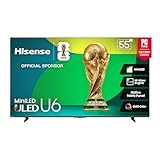
The Hisense U6 Series has become one of the most talked-about budget-to-mid-range TVs in recent years, and the 2025 model — the 55U65QF — builds on that reputation with meaningful hardware upgrades. This review focuses specifically on real-world performance across picture quality, gaming, and everyday use. You can find the Hisense 55″ U6 Series on Amazon here.
This TV is aimed at buyers who want premium display technology without paying flagship prices. With Mini-LED backlighting, QLED color, native 144Hz, and Fire TV built in, it packs a lot into a competitive price point.
Quick Answer
The Hisense U6 Series (2025) delivers strong picture quality for its price class, with Mini-LED backlighting, up to 1000 nits peak brightness, and 600 local dimming zones. It supports native 144Hz for gaming, Dolby Vision IQ, and HDR10+. It is a well-rounded performer for mixed use, including streaming, sports, and gaming.
Key Takeaways
- Mini-LED backlighting with up to 600 local dimming zones significantly improves contrast over standard LED TVs
- Native 144Hz panel with Motion Rate 480 makes this a capable gaming and sports TV
- QLED quantum dot color produces over a billion shades for accurate, vibrant images
- AMD FreeSync Premium support enables smooth variable refresh rate gaming between 48Hz and 144Hz
- Fire TV OS provides a clean, intuitive smart TV experience with Alexa built in
- At its price point, the U6 Series competes directly with TVs that cost significantly more
Picture Quality Performance
How Good Is the Mini-LED Backlighting?
The Mini-LED backlighting is the centerpiece of the U6’s picture performance. With up to 1000 nits of peak brightness and up to 600 local dimming zones, this TV can produce deep blacks and bright highlights simultaneously. This is a meaningful step above edge-lit LED panels, which often suffer from blooming and uneven lighting.
In practice, scenes with high contrast — think night cityscapes or dark movie sequences — look noticeably more defined. Full Array Local Dimming keeps bright objects from bleeding light into darker surrounding areas, which was a common complaint with earlier budget Mini-LED TVs.
QLED Color Accuracy
QLED technology uses quantum dots to expand the color volume beyond what standard LED panels can produce. The U6 renders over a billion shades of color, which translates to more accurate skin tones, richer greens in nature and sports content, and more vivid reds and blues overall.
This matters most when watching HDR content. With both Dolby Vision IQ and HDR10+ support, the TV adjusts its picture processing dynamically based on the content’s metadata and ambient lighting conditions.
AI Picture Processing
The Hi-View AI Engine handles upscaling, noise reduction, and picture optimization using an onboard AI chipset. For viewers who primarily watch cable, broadcast, or lower-resolution streaming content, this processing helps fill in detail and reduce compression artifacts. It is not a replacement for native 4K content, but it does make lower-quality sources look more presentable on a large screen.
Gaming Performance
Is the Hisense U6 Good for Gaming?
Yes, the U6 Series is a strong gaming TV for its price range. The native 144Hz panel is a genuine differentiator at this price point — many competing TVs advertise high refresh rates but achieve them through interpolation rather than native panel capability.
Game Mode Pro enables:
- Variable Refresh Rate (VRR) from 48Hz to 144Hz via AMD FreeSync Premium
- Auto Low Latency Mode (ALLM) for automatic input lag reduction
- Optimized response times to reduce motion blur during fast gameplay
For console gamers, the ALLM feature automatically switches the TV into its lowest latency mode when a compatible device is detected. PC gamers with AMD GPUs will wondered why your 144Hz monitor is only showing 60Hz, the same HDMI bandwidth and settings considerations apply when connecting a PC to this TV.
Smart TV Experience: Fire TV
The U6 uses Amazon’s Fire TV OS, which is one of the more polished smart TV platforms available. The home screen surfaces content from across your subscribed apps in a unified interface, and Alexa is accessible via the remote’s dedicated button.
The Press and Ask Alexa feature lets you search for content, check sports scores, control smart home devices, and set reminders without navigating menus. For households already using Amazon Echo devices or Prime Video, Fire TV integration feels seamless.
One consideration: Fire TV is ad-supported on the home screen, which some users find intrusive. This is a trade-off common to the platform rather than specific to Hisense.
Audio Performance
The U6 supports Dolby Atmos, which enables spatial audio when paired with compatible soundbars or AV receivers. The built-in speakers are adequate for casual viewing but will not replicate the depth and directionality that Dolby Atmos is designed to deliver. For serious home theater use, an external audio solution is recommended.
Hisense U6 vs. Competitors
How does the U6 compare to other popular TVs in its class?
The Hisense U6 compared to the TCL QM7 and Samsung Q60D shows distinct differences in local dimming capability and panel technology. The U6 leads in local dimming zone count at this price tier, while Samsung’s Q60D uses a different QLED implementation without Mini-LED.
| Feature | Hisense U6 (2025) | TCL QM7 | Samsung Q60D |
|---|---|---|---|
| Backlight Type | Mini-LED | Mini-LED | Edge-LED QLED |
| Peak Brightness | ~1000 nits | ~1500 nits | ~600 nits |
| Local Dimming Zones | Up to 600 | Up to 240 | Limited |
| Native Refresh Rate | 144Hz | 144Hz | 60Hz (native) |
| VRR Support | AMD FreeSync Premium | AMD FreeSync | FreeSync |
| HDR Formats | Dolby Vision IQ, HDR10+ | Dolby Vision, HDR10+ | HDR10+ |
| Smart Platform | Fire TV | Google TV | Tizen |
The U6 wins on local dimming zone count vs. the TCL QM7, but the QM7 edges it out on raw brightness. Compared to the Samsung Q60D, the U6 offers a clear advantage in native refresh rate and local dimming performance.
For more context on how display technology affects your viewing experience, the Dell P2219H monitor review explores how panel specs translate to real Hisense U6?
Good fit for:
- Gamers who want 144Hz and VRR without a premium price
- Sports viewers who prioritize motion clarity and brightness
- Households already invested in the Amazon/Fire TV ecosystem
- Buyers seeking Mini-LED performance under $700
Less ideal for:
- Viewers who need near-perfect black levels (OLED remains the benchmark)
- Users who prefer Google TV or Roku OS
- Those who want the absolute highest brightness for very bright rooms
If you’re also considering how screen time affects different audiences, how much TV a 4-year-old should watch is worth reviewing before setting up a family viewing environment.
Conclusion
The Hisense U6 Series (2025) is a genuinely capable TV that delivers Mini-LED contrast, QLED color, and native 144Hz performance at a price that undercuts many competitors. It is not flawless — built-in audio is average and Fire TV’s ad-heavy interface divides opinion — but the core display performance is hard to fault at this price.
For buyers prioritizing picture quality and gaming performance in the mid-range segment, the U6 is one of the strongest options available in 2025.
Frequently Asked Questions
Is the Hisense U6 good for watching sports?
Yes. The native 144Hz panel and Motion Rate 480 processing reduce motion blur during fast-paced action, making it well-suited for sports content. The high peak brightness also performs well in lit rooms during daytime viewing.
Does the Hisense U6 support 4K at 144Hz?
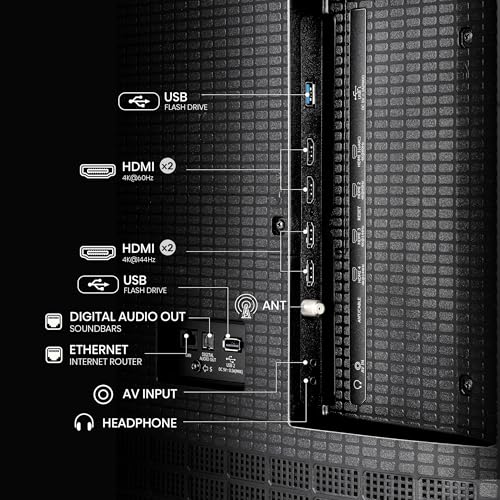
The U6 supports 144Hz, but maximum resolution at that refresh rate depends on the HDMI version and source device capability. Check the TV’s HDMI 2.1 port specifications for 4K/144Hz compatibility with your specific console or PC.
What is the input lag on the Hisense U6?
In Game Mode, the Hisense U6 Series typically measures around 10–16ms input lag at 4K/60Hz, which is competitive for gaming. ALLM automatically activates Game Mode when a compatible device is detected.
Does the Hisense U6 have Dolby Vision?
Yes. The U6 supports Dolby Vision IQ, which is the more advanced version of Dolby Vision. It adjusts HDR tone mapping based on ambient light conditions in your room for a more consistent picture.
How does Fire TV compare to other smart TV platforms?
Fire TV offers a content-first interface with strong Alexa integration and broad app support. It is generally considered comparable to Google TV in terms of app availability, though it features more prominent advertising on the home screen than some competing platforms.
This article was last updated on May 26, 2026 .
