
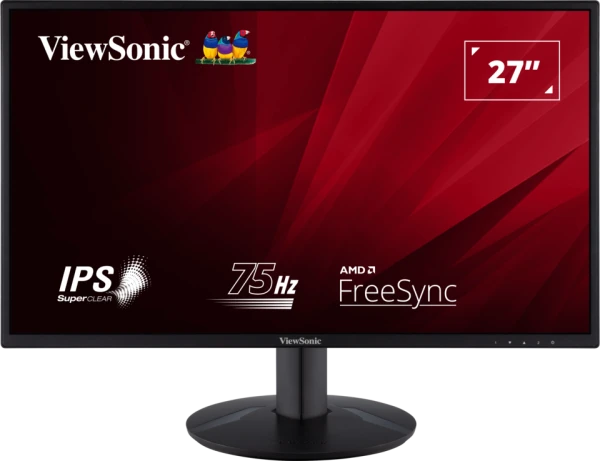
ViewSonic is a well-established display brand that has been producing monitors for professionals, gamers, and everyday users for decades. If you’re researching a ViewSonic monitor, you’re likely weighing whether the brand delivers reliable performance at its price point. This guide breaks down what ViewSonic offers, who their monitors are best suited for, and what to look for before making a purchase.
Quick Answer
ViewSonic monitors are a solid mid-range option offering good color accuracy, reliable build quality, and a wide range of screen sizes and panel types. They are well-suited for office work, content creation, and gaming depending on the model. Most ViewSonic monitors offer strong value compared to premium brands at similar price points.
Key Takeaways
- ViewSonic offers monitors across multiple categories including gaming, professional, and general-purpose displays
- Panel types range from IPS and VA to TN, each suited to different use cases
- Many models support features like FreeSync, high refresh rates, and factory color calibration
- ViewSonic monitors are generally considered reliable for the price, though they are not typically positioned as flagship-tier displays
- Checking resolution, panel type, and refresh rate is essential before buying any ViewSonic model
- The brand offers a three-year limited warranty on most monitors, which is competitive in the category
What Types of ViewSonic Monitors Are Available?
ViewSonic produces monitors across several distinct product lines, each targeting a specific type of user. Understanding these categories helps narrow down which model fits your needs.
Gaming monitors under the Elite and XG series feature high refresh rates (up to 240Hz or higher), low response times, and AMD FreeSync or NVIDIA G-Sync compatibility. These are built for competitive and casual gaming alike.
Professional and creative monitors in the VP series offer wide color gamut coverage, factory calibration, and accurate color reproduction. These are designed for photographers, video editors, and graphic designers who need precise color output.
General-purpose and office monitors in the VA and VX series prioritize affordability and usability. These are ideal for everyday computing, productivity tasks, and home office setups.
What Panel Types Do ViewSonic Monitors Use?
ViewSonic monitors use three main panel technologies:
- IPS (In-Plane Switching): Offers wide viewing angles and accurate colors. Best for creative work and general use.
- VA (Vertical Alignment): Delivers higher contrast ratios and deeper blacks. Good for media consumption and mixed use.
- TN (Twisted Nematic): Fastest response times but narrower viewing angles. Often found in entry-level gaming monitors.
For most buyers, IPS panels offer the best balance of color quality and viewing flexibility. If you’re dealing with washed-out or gray colors on your display, panel type and HDR settings are often the root cause.
What Resolutions Do ViewSonic Monitors Support?
ViewSonic offers monitors across a full range of resolutions:
| Resolution | Common Use Case | Typical Screen Size |
|---|---|---|
| 1080p (FHD) | Office work, casual gaming | 22″ to 27″ |
| 1440p (QHD) | Gaming, content creation | 27″ to 32″ |
| 4K (UHD) | Professional work, media | 27″ and above |
For most users, a 1440p ViewSonic monitor hits the sweet spot between sharpness and performance. Understanding how resolution interacts with screen size is important. For context on how resolution scaling works, see this breakdown of 1440 x 900 resolution and when it matters.
Are ViewSonic Monitors Good for Gaming?
Yes, ViewSonic gaming monitors are a competitive option in the mid-range segment. The XG and Elite series include features that matter for gaming performance:
- Refresh rates from 144Hz up to 280Hz on select models
- Response times as low as 1ms (MPRT)
- AMD FreeSync Premium and G-Sync compatibility on many models
- Built-in crosshairs and black stabilization modes for competitive play
One important note: if you buy a high-refresh-rate ViewSonic monitor and it defaults to 60Hz, that is a software or cable issue, not a hardware defect. This is a common setup mistake covered in detail in this guide on why your 144Hz monitor may only show 60Hz.
Are ViewSonic Monitors Good for Professional or Creative Work?
The ViewSonic VP series is specifically designed for professional use. Key features include:
- Factory color calibration with individual calibration reports
- 100% sRGB and Adobe RGB coverage on select models
- Hardware calibration support via ViewSonic’s Colorbration software
- Ergonomic stands with height, tilt, swivel, and pivot adjustments
For creative professionals, these features matter significantly. A monitor that cannot accurately represent colors will affect final output in print, video, and web design work.
What Should You Check Before Buying a ViewSonic Monitor?
Before purchasing any ViewSonic monitor, verify these key specs:
- Panel type (IPS, VA, or TN) based on your primary use case
- Resolution relative to your GPU’s output capability
- Refresh rate if gaming is a priority
- Connectivity (HDMI version, DisplayPort, USB-C) to match your devices
- HDR support level (DisplayHDR 400 vs. 600 vs. true HDR performance)
- Ergonomics including stand adjustability or VESA mount compatibility
If you plan to use the monitor in a multi-display setup, it is also worth reviewing how different display configurations work. A practical resource is this complete guide to setting up dual monitors with HDMI or this broader overview of multiple monitor setups.
How Does ViewSonic Compare to Other Monitor Brands?
ViewSonic sits in a competitive mid-range category alongside brands like Acer, ASUS, and LG. Here is a general comparison:
- vs. Dell: Dell offers slightly better build quality and customer support on professional models. ViewSonic often undercuts Dell on price for similar specs.
- vs. ASUS: ASUS gaming monitors (ROG and TUF series) offer more premium gaming features. ViewSonic Elite models compete well at lower price points.
- vs. LG: LG leads in OLED and high-end IPS displays. ViewSonic is more practical for budget-conscious buyers who do not need flagship performance.
ViewSonic is not the right choice if you need a top-tier professional display or the absolute best gaming performance. For those needs, higher-end options like the Dell UP3218K represent what premium display investment looks like.
Does ViewSonic Offer a Warranty?
Most ViewSonic monitors come with a three-year limited warranty covering defects in materials and workmanship. Some professional models include pixel performance guarantees. Warranty service is handled through ViewSonic’s U.S. support network.
Always register your monitor after purchase to activate warranty coverage and receive firmware update notifications.
Conclusion
ViewSonic monitors offer a reliable, well-rounded option for buyers who want solid performance without paying premium brand prices. Whether you are building a home office setup, upgrading for gaming, or equipping a creative workstation, there is likely a ViewSonic model that fits the need. The key is matching the right product line and specs to your actual use case before purchasing.
Spending a few minutes reviewing panel type, resolution, and connectivity before buying will prevent most common post-purchase issues and ensure the monitor you choose performs as expected.
FAQs
Are ViewSonic monitors reliable?
ViewSonic monitors are generally considered reliable for their price range. The brand has a long track record in the display industry and backs most products with a three-year limited warranty.
Is ViewSonic a good brand for gaming monitors?
Yes, ViewSonic’s XG and Elite gaming series offer competitive specs including high refresh rates and low response times. They are a strong value option for mid-range gaming setups.
Do ViewSonic monitors support 4K?
Yes, several ViewSonic models support 4K UHD resolution, particularly in the VP professional series and higher-end VX models. Always confirm the resolution in the product specs before purchasing.
Can I use a ViewSonic monitor for photo editing?
ViewSonic VP series monitors are suitable for photo editing due to their factory color calibration and wide color gamut coverage. Standard VX or XG models are not recommended for color-critical work.
What is the typical price range for ViewSonic monitors?
ViewSonic monitors range from approximately $100 for basic 1080p models to over $800 for professional 4K displays with factory calibration. Most popular models fall in the $150 to $400 range.
This article was last updated on June 12, 2026 .
