
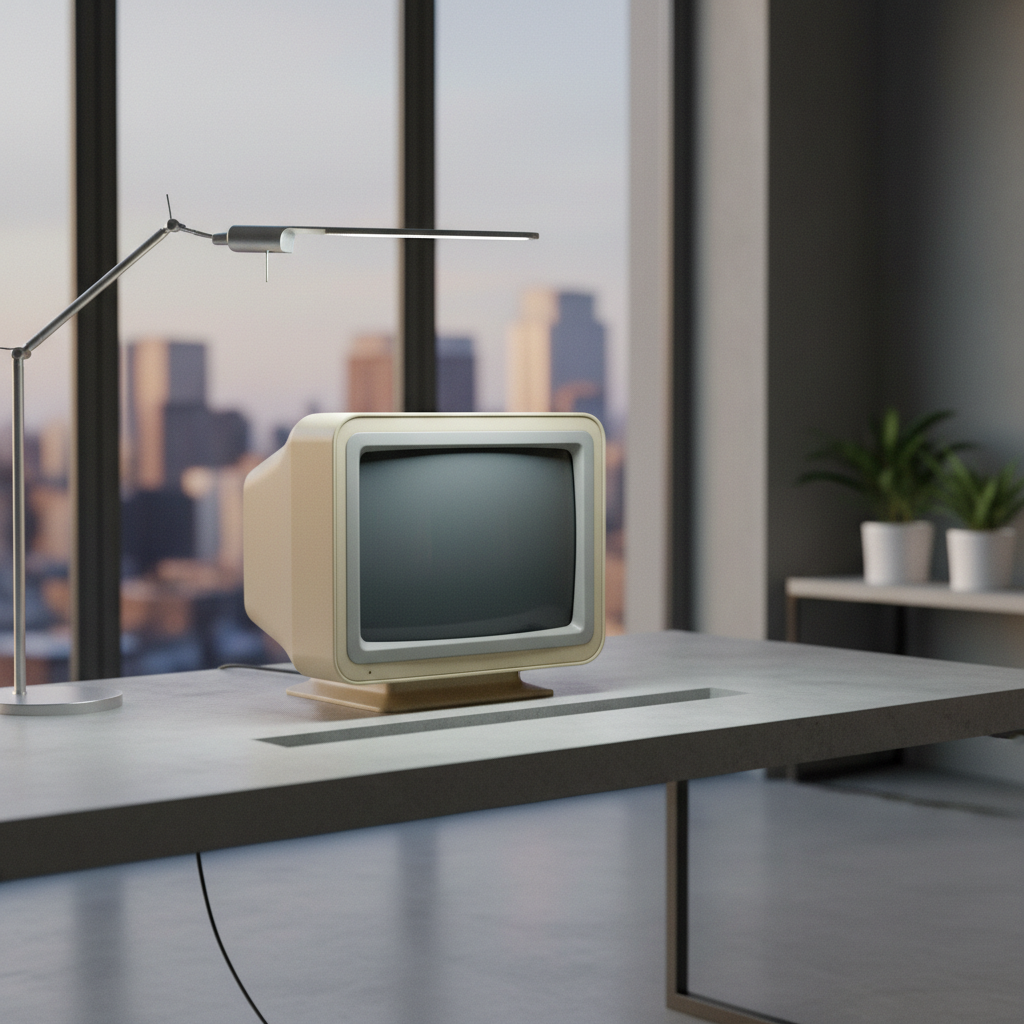
The computer monitor is one of the most essential pieces of technology in modern life, yet most people have never stopped to wonder where it came from or who made it possible. Understanding the inventor of the monitor means tracing a fascinating line of innovation that spans decades and involves multiple pioneering minds.
This article is for anyone curious about the origins of display technology, whether you are a tech history enthusiast, a student, or simply someone who wants to understand the tools they use every day.
Quick Answer: Who Invented the Monitor?
Karl Ferdinand Braun invented the cathode ray tube (CRT) in 1897, which became the foundational technology behind the first monitors. However, Allen Du Mont is widely credited with developing the first practical CRT monitor in the 1930s. The modern computer monitor as we know it was pioneered by engineers at Xerox PARC in the early 1970s.
Key Takeaways
- The monitor’s history begins with Karl Ferdinand Braun’s invention of the CRT in 1897
- Allen Du Mont refined CRT technology into a usable display device in the 1930s
- Xerox PARC developed the first true graphical computer monitor in the early 1970s
- IBM played a major role in popularizing monitors for personal computers in the 1980s
- Monitor technology has evolved from CRT to LCD, LED, OLED, and beyond
- No single person can claim sole credit for the modern monitor; it was a collective evolution
- The shift from CRT to flat-panel displays in the late 1990s and 2000s transformed the industry
- Today’s monitors offer resolutions, refresh rates, and panel technologies that early inventors could never have imagined
The Origins of Monitor Technology: Karl Ferdinand Braun and the CRT
Karl Ferdinand Braun, a German physicist, invented the cathode ray tube in 1897. This device used an electron beam directed at a phosphor-coated screen to produce visible light, forming the basis of all early display technology.
Braun’s invention was initially used for scientific measurement, not computing. However, it laid the groundwork for every screen-based display that followed, earning him a Nobel Prize in Physics in 1909.
Allen Du Mont: The Father of the Practical CRT Monitor
Allen Balcom Du Mont is often called the father of the modern CRT monitor. In the 1930s, he refined Braun’s technology to create longer-lasting, more reliable cathode ray tubes suitable for consumer and commercial use.
Du Mont’s improvements made it practical to build television sets and early oscilloscope displays. His work directly influenced how display screens were manufactured and used for decades.
Why Du Mont Matters in Monitor History
- He extended the lifespan of CRT tubes from hours to thousands of hours
- His company produced some of the first commercial television sets in the United States
- His engineering standards became the foundation for broadcast and display industries
The First Computer Monitor: Xerox PARC in the 1970s
The first true computer monitor, designed specifically to display graphical output from a computer, was developed at Xerox PARC (Palo Alto Research Center) in the early 1970s.
The Xerox Alto, introduced in 1973, featured a high-resolution bitmapped display that allowed users to interact with graphical icons and windows. This was revolutionary. Before this, computers used text-only terminals or printed output rather than visual screens.
The Alto’s monitor concept directly inspired Steve Jobs and the team at Apple, leading to the development of the Apple Lisa and eventually the Macintosh, which brought the graphical monitor to mainstream consumers.
IBM and the Popularization of the PC Monitor
While Xerox PARC pioneered the concept, IBM played the largest role in making monitors a household standard. The IBM 5151, released in 1981 alongside the original IBM PC, became the defining model for what a personal computer monitor should look like.
IBM’s monitors used monochrome phosphor displays initially, before color CRT monitors became standard through the mid-1980s and 1990s. The IBM 8513 and 8514 color monitors set the resolution benchmarks that other manufacturers followed.
This era saw brands like Acer, ViewSonic, and others enter the monitor market, building on the standards IBM established.
The Transition from CRT to Flat Panel Displays
The late 1990s and early 2000s marked a massive shift in monitor technology. Liquid Crystal Display (LCD) panels began replacing CRT monitors due to their thinner profile, lower power consumption, and reduced eye strain.
Key milestones in this transition include:
- 1997: The first affordable consumer LCD monitors appeared on the market
- 2003: LCD monitor sales surpassed CRT sales in the United States for the first time
- 2007: CRT monitors were largely discontinued by major manufacturers
- 2010s: LED-backlit LCD panels became the new industry standard
This shift had a direct impact on user comfort. If you have ever wondered about how to prevent digital eye strain, the move to LCD and LED technology was a significant step in reducing the flicker and radiation associated with older CRT screens.
Monitor Technology Comparison: CRT vs. Modern Displays
| Feature | CRT Monitor | Modern LED/LCD Monitor |
|---|---|---|
| Depth/Thickness | 12 to 20 inches deep | 1 to 3 inches thin |
| Power Consumption | 80 to 150 watts | 20 to 40 watts |
| Resolution Flexibility | Variable, native-free | Fixed native resolution |
| Color Accuracy | High (for its era) | Excellent (especially IPS panels) |
| Refresh Rate | Up to 160Hz | Up to 360Hz+ |
| Eye Strain Risk | Higher (flicker) | Lower (with flicker-free tech) |
| Lifespan | 25,000 to 30,000 hours | 30,000 to 50,000+ hours |
Monitor Panel Technology Evolution
| Panel Type | Introduced | Key Advantage | Best Use Case |
|---|---|---|---|
| CRT | 1897 (refined 1930s) | Deep blacks, fast response | Legacy computing |
| LCD (TN) | Late 1990s | Fast response time | Competitive gaming |
| LCD (IPS) | Early 2000s | Wide color accuracy | Design, photo editing |
| LED-backlit LCD | Mid 2000s | Energy efficiency | General use |
| OLED | 2010s | Perfect blacks, contrast | Premium content, gaming |
| Mini-LED | 2020s | Improved local dimming | High-end gaming, HDR |
Brands like MSI and Philips now produce monitors using the most advanced panel technologies available, a far cry from the phosphor screens of the 1930s.
Common Misconceptions About the Inventor of the Monitor
Misconception 1: One person invented the monitor.
The monitor was not invented by a single individual. It evolved through contributions from Braun, Du Mont, Xerox engineers, IBM hardware teams, and countless other innovators over nearly a century.
Misconception 2: The television and the computer monitor are the same invention.
While both use similar display technology, the computer monitor was specifically engineered to display digital computer output at close viewing distances with high resolution. The television was designed for broadcast viewing from across a room.
Misconception 3: Steve Jobs invented the monitor.
Jobs popularized the graphical monitor for consumers through Apple, but he did not invent it. Xerox PARC engineers built the first graphical display years before Apple’s products launched.
For anyone setting up a modern display workspace, understanding this history helps contextualize why monitors are designed the way they are today. Resources like this guide on multiple monitor setups and setting up dual monitors with HDMI reflect just how far display technology has come from those early CRT experiments.
If you are curious about how resolution standards developed from these early innovations, the Dell2219H resolution breakdown offers a practical look at how modern pixel density standards came to be.
Conclusion
The invention of the monitor is a story of layered innovation rather than a single eureka moment. From Karl Ferdinand Braun’s CRT in 1897 to Allen Du Mont’s practical refinements, through Xerox PARC’s graphical breakthrough and IBM’s mass-market standardization, the monitor evolved through the work of many brilliant engineers and researchers.
Understanding this history gives context to the technology you use every day, and helps explain why modern monitors continue to improve in resolution, speed, color accuracy, and efficiency.
FAQs
Who is credited with inventing the first computer monitor?
Xerox PARC is credited with developing the first true computer monitor in 1973 with the Xerox Alto. It was the first display designed to show graphical output from a computer rather than just text.
What technology did the first monitors use?
The first monitors used cathode ray tube (CRT) technology, which was invented by Karl Ferdinand Braun in 1897 and refined for practical use by Allen Du Mont in the 1930s.
When did flat screen monitors replace CRT monitors?
LCD flat panel monitors overtook CRT monitors in sales in the United States around 2003. By 2007, most major manufacturers had stopped producing CRT monitors entirely.
Did Steve Jobs invent the computer monitor?
No. Steve Jobs did not invent the computer monitor. He was inspired by the graphical display developed at Xerox PARC and used that concept as the foundation for Apple’s Lisa and Macintosh computers.
What is the difference between a TV screen and a computer monitor?
A computer monitor is optimized for close-range viewing, high pixel density, and digital signal input. A television is designed for broadcast content viewed from a greater distance, typically with different input and tuner systems.
Who made the first color computer monitor?
IBM introduced the Color Graphics Adapter (CGA) standard in 1981, enabling color output. The IBM 5153 was one of the first widely used color monitors for personal computers.
What replaced CRT monitor technology?
LCD (Liquid Crystal Display) technology replaced CRT monitors, followed by LED-backlit LCDs, and more recently OLED and Mini-LED panels, each offering improvements in image quality and energy efficiency.
This article was last updated on September 21, 2026 .
